1Amamchi Iroulor
2Scholastica Chinyere Amadi
Corresponding author email: chijioke.amamch@gmail.com, scholastica.amadi@iaue.edu.ng
+234 810 320 1308; +234 803 879 0756
Introduction
A paradigm shift has occurred in English language instruction in the last several decades, away from teacher-centered approaches and toward student-centered, technology-enhanced pedagogical methods that place a premium on active participation, independence, and fluency in speech and writing. The growing consensus that digital technologies can enhance language learning in the modern era is driving this paradigm shift (Chen & Wang, 2021). These technologies have the ability to create learning environments that are immersive, interactive, and tailored to each individual's needs, rather than relying solely on traditional methods. The use of technology in ESL classrooms has evolved from an adjunct to a core component of cutting-edge pedagogy that caters to students' individual preferences and needs as schools around the world face the daunting task of educating the next generation to thrive in an interdependent global community.
Traditional English Language Teaching Methods
Traditionally, ESL classrooms have followed teacher-centered models that emphasised memorisation of new words and phrases, fluency in formal English, and correct grammar usage. For generations, teachers of foreign languages relied on the Grammar-Translation Method, which paid little attention to students' oral communication skills and instead focused on their ability to understand and translate written text into their native tongue (Richards & Rodgers, 2021). Students understood English grammar in a theoretical sense but were ill-equipped to apply what they learned in real-life contexts due to the methodical approach, which frequently led to passive learning.
The Audio-Lingual Method, which emerged in the middle of the twentieth century, provided a more structured approach to language acquisition through the use of behaviourist principles, pattern practice, and repeated drills. Incorporating listening and speaking exercises into the system mitigated some of the problems with the Grammar-Translation technique. Still, there were limited opportunities for students to engage in meaningful conversation because of the heavy emphasis on teacher-led instruction (Brown & Lee, 2020). Memorisation of dialogues and the use of fixed language patterns were promoted. The ability to think critically and creatively was given very little weight.
The Communicative Language Teaching (CLT) paradigm arose in the 1970s as an alternative to conventional wisdom, which placed an emphasis on memorisation rather than on the development of fluent communicative competence. The CLT method prioritised activities that were learner-centred, used real-world materials, and encouraged functional language use to improve accuracy and fluency (Larsen-Freeman & Anderson, 2021). However, students were unprepared for the multimedia-rich, ever-changing communication environments they would face in a globalised world because conventional Communicative Language Teaching methods relied on textbook material and classroom interactions.
However, traditional methods of teaching English had limited capabilities and played a minor role in language instruction. It was difficult for these systems to cater to students' unique learning styles and preferences, and they seldom exposed them to authentic language usage in a variety of settings (Johnson, 2022). Furthermore, traditional methods frequently fell short in fostering digital literacy skills, which are nowadays necessary for effective communication in both academic and professional settings.
Modern English Language Teaching Methods
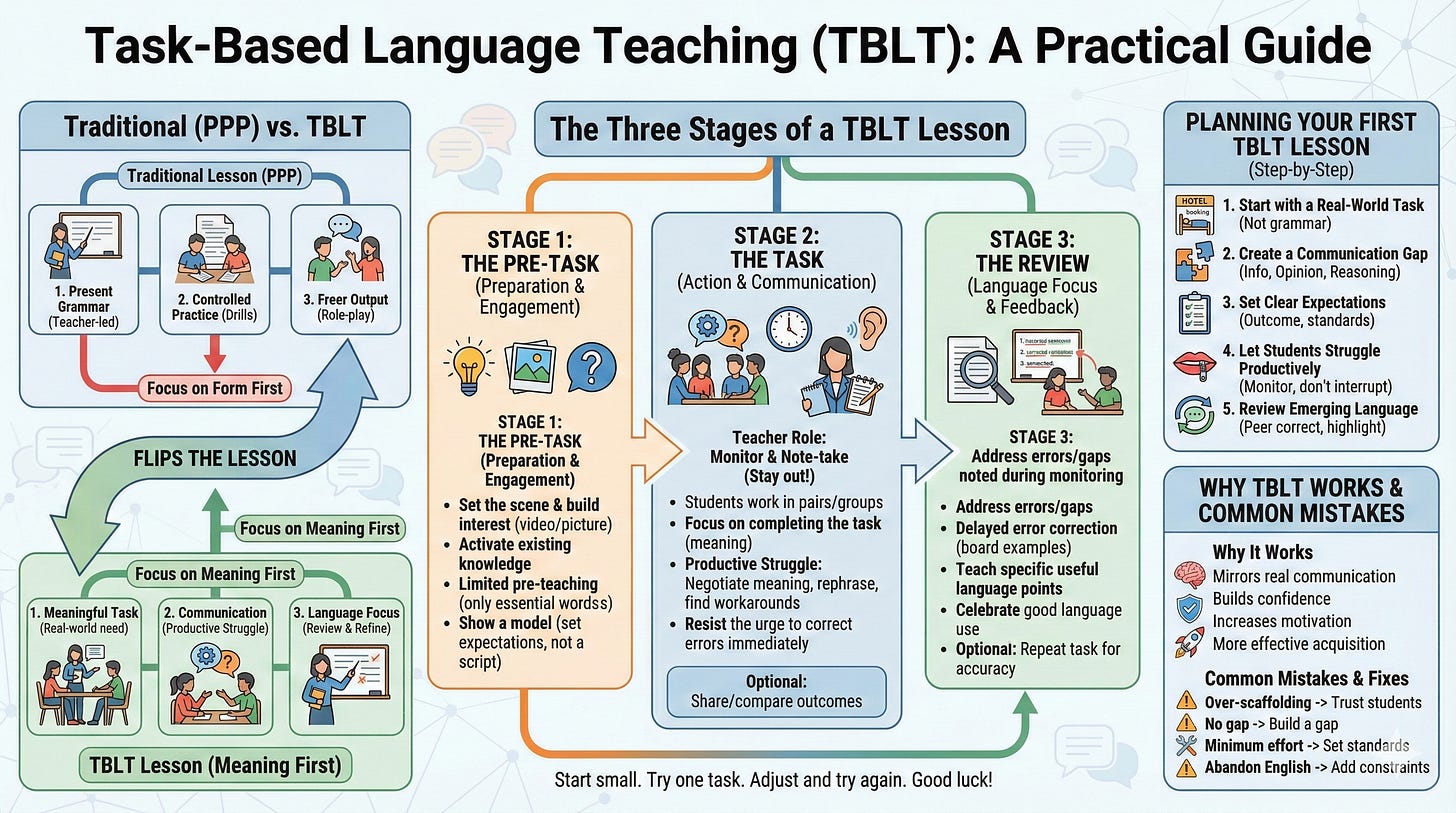
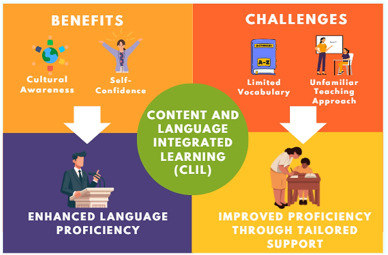
Contemporary English A paradigm shift has occurred in the field of education, with an emphasis on learner-centred, technology-integrated strategies that foster critical thinking, collaborative learning, and genuine communication. Task-Based Language Teaching (TBLT) is one such innovation; it places an emphasis on having students complete tasks that are relevant to their language learning and that mimic real-life language use (Ellis & Shintani, 2021). These days, TBLT is all about using digital platforms to create virtual classrooms where students may practise real-world communication skills, connect with classmates no matter where they are, and have access to multimedia materials to supplement their education. In response to the increasingly interconnected nature of current communication demands, one prominent contemporary approach is Content and Language Integrated Learning (CLIL), which combines language instruction with content area studies. Thanks to digital technologies, CLIL has evolved to include virtual field trips, real content from a variety of sectors, and opportunities for students of varied language backgrounds to work together on projects (Coyle et al., 2020). Thanks to these technological advancements, teachers can create interactive classrooms that immerse children in the English language and help them get ready for college and the workforce. Because of advancements in global communication, multimedia creative platforms, and online collaboration tools, project-based learning (PBL) in English as a second language (ESL) settings has changed. According to Stoller and Myers (2020), modern project-based learning (PBL) methods provide students with chances to work on long-term projects that involve research, creative problem-solving, and the transmission of outcomes to real audiences through digital platforms. The approach emphasises not only language proficiency but also digital literacy, critical thinking, and the ability to communicate effectively across cultural boundaries.
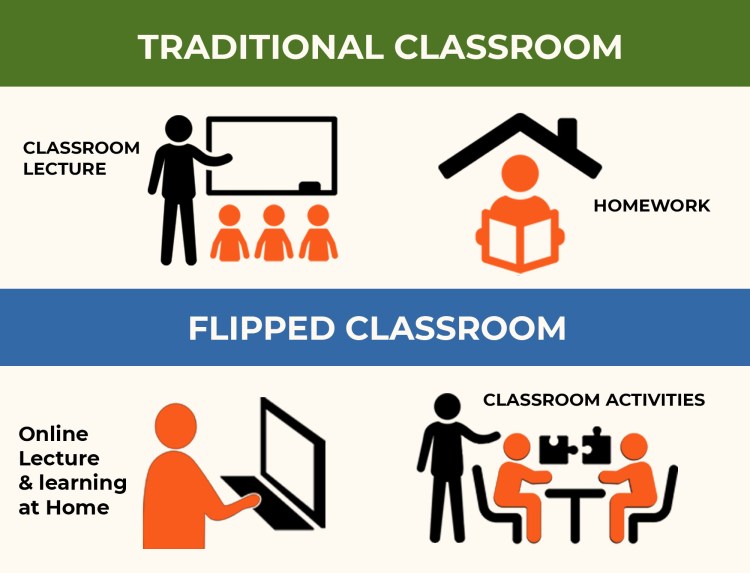
The Flipped Classroom model is a cutting-edge strategy for contemporary English language teaching (ELT) that uses technology to turn the tables on conventional teaching methods. Instead of presenting material in a traditional lecture format, students view it on online platforms before coming to class (Tucker, 2022). Students are able to study at their own speed and revisit previously covered material with this method, making it perfect for fostering true engagement.
Technology Integration Concepts in English Language Teaching
There is more to incorporating technology into ESL classrooms than just incorporating digital resources into established methods of instruction. It represents a radical shift in thinking about the use of technology in language acquisition. In order to create mutually beneficial interactions between technology and pedagogy, it is necessary to do a thorough assessment of educational principles, learning goals, and the affordances of individual technological instruments (Chapelle & Sauro, 2020). As part of this integration, conventional wisdom is being rethought in order to better leverage digital technology's affordances for the benefit of language learning results.
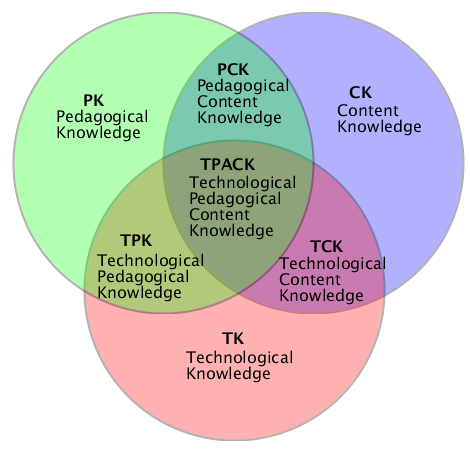
When it comes to comprehending how to effectively use technology into language training, the Technology, Pedagogy, and Content Knowledge model has been quite influential. To determine how to effectively employ technology in the classroom, this method emphasises the interplay between technical, pedagogical, and content knowledge (Koehler et al., 2021). As it pertains to ESL classrooms, TPACK requires educators to have a clear grasp on how various technologies might support specific language learning goals, grounded in proven pedagogical practices.
Blended learning is another important concept in ELT that incorporates technology. In order to maximise learning outcomes, blended learning incorporates both online and face-to-face learning components. By combining digital platforms for content delivery, individual practice, and asynchronous communication with in-person time for interactive activities, group projects, and complicated problem-solving, successful blended learning designs in ELT contexts make strategic use of the advantages of both modalities (Graham et al., 2021). In order to address different aspects of language acquisition, this approach acknowledges that different delivery routes may be more effective. Modern approaches to teaching English as a second language have increasingly centred on the idea of digital literacy, which recognises that students of the language need to develop skills in more than just effective communication in order to succeed in today's globalised world. The two main goals of incorporating technology into ESL classrooms are (1) making language learning more accessible and (2) equipping students with the basic digital skills necessary for success in today's increasingly digitalised worlds (Dudeney et al., 2021).
Gamification Based Learning in ELT Enhancing Engagement
Incorporating game design principles and ideas into language learning environments, gamification is a game-changing approach to ELT that increases motivation, engagement, and retention. This method takes into account the fact that games already have many instructional features that help students learn a language better, including levels that get increasingly harder, the ability to work together to solve problems, and real-life scenarios where the language is needed (Reinhardt & Thorne, 2020). Instructors can build engaging, immersive learning experiences that target specific language skills utilising digital gamification platforms.
Theoretical Framework
Constructivism, social learning theory, and flow theory are a few of the learning theories that provide the theoretical groundwork for gamification in ELT. Learners actively construct knowledge through exploration, experimentation, and problem-solving in meaningful contexts in game-based learning environments (Pivec & Dziabenko, 2021). Social learning theory lends credence to collaborative gaming experiences that put students in real-world communication contexts where they can observe, model, and learn from their classmates. Using the principles of flow theory, well-designed educational games can provide an optimal learning environment by tailoring the difficulty to each student's current ability, keeping their attention, and encouraging them to acquire new abilities.
Using digital gamification technologies in ESL classrooms ranges from basic quiz-based programs to complex VR environments designed to mimic authentic conversational scenarios. Kahoot!, Quizizz, and Gimkit are just a few of the platforms that have revolutionised vocabulary and grammar preparation. These sites have taken traditional exercises and made them into fun, competitive games that provide immediate feedback and track your progress (Bicen & Kocakoyun, 2021). With these resources, educators may create engaging, individualised lessons that cover all the necessary material while keeping students actively involved. Students learn a language through role-playing, quest-completing, and level-advancing narrative-based learning experiences—a more complex gamification paradigm. Multimedia components, adjustable difficulty settings, and social interaction capabilities that mimic real-world communication settings are typical of such settings (Chen & Hsu, 2020). Some examples of full-fledged language learning systems that incorporate gamification principles into enjoyable and interactive experiences to teach many language abilities include Duolingo, Busuu, and Babbel.
Learning can be made more engaging and interesting with the use of artificial intelligence (AI) by enhancing the gamification of educational content. By utilising leader boards and tailored feedback to increase motivation, as well as by adjusting game difficulties to a child's development, toys driven by AI can make learning feel like play. AI-enabled toys: Robots such as Vector and Miko 3 can respond to a child's voice, play games, and even personalise their learning experience. Children with a wide range of learning styles and needs may find it easier to access instructional materials with the help of AI. With the help of AI, we can create games, quizzes, and activities that target specific abilities and places where a child needs more practice. Reading and numeracy aids utilising artificial intelligence (AI) are already in use, according to A-Okujagu (2025). In this way, AI assists both adults and children in becoming more actively involved and motivated, as well as in overcoming specific obstacles that may otherwise stand in their way.
Research has proven that gamification can be a useful tool for English language teachers. It has been demonstrated to increase student motivation, increase time on task, and improve learning outcomes for a range of linguistic competencies. According to the findings, gamified learning environments provide an alternative to standard teaching methods, allowing students with different learning styles and motivational profiles to learn a language (Zou, 2020). Gamification also opens doors to authentic assessment, where students may show what they can do by completing real-world tasks that are relevant to their course rather than generic tests.
Adaptive Learning Systems and Phone Software Applications
One significant advancement in educational technology is adaptive learning systems. Machine learning and artificial intelligence algorithms allow them to personalise lessons based on each student's characteristics, past performance, and preferred methods of learning. To maximise learning results for every student, adaptive systems in ELT assess student interactions, detect knowledge gaps, and change the level of difficulty, presentation style, and instructional sequence (Xie et al., 2021). From generic, one-size-fits-all approaches to authentic, individually tailored language education, these innovations represent a sea change. In order to keep tabs on students' progress, identify patterns of mistakes, and foretell the best ways for them to learn, adaptive learning systems rely on a robust data analytics infrastructure. In order to determine which teaching methods work best for different types of learners, machine learning algorithms sift through the mountains of data produced by student interactions. According to Zawakki-Richter et al. (2021), this allows systems to make better predictions about the best ways to distribute content and practice opportunities.
With this data-driven approach, we can cater to each learner's unique speed, style, and choice in a way that was previously impossible in language acquisition. With the use of adaptive learning principles, phone apps are becoming more intelligent in their pursuit of English language proficiency. These apps leverage the widespread availability of cellphones to provide continuous, customised opportunities for language learning that adapt to the schedules, preferences, and skill levels of learners. The most up-to-date language learning systems incorporate AI, speech recognition, and natural language processing to provide a dynamic learning environment that adapts to each student's progress in real-time while providing quick feedback (Kim & Kim, 2020).
Adaptive Learning Phone Applications
With over 500 million users across the globe, Duolingo provides a personalised English learning experience and is among the most successful adaptive learning applications for mobile language education. Learners' progress in areas including vocabulary acquisition, grammar comprehension, listening comprehension, and reading comprehension may be tracked by the application's sophisticated algorithms (Settles & Meeder, 2021). Based on the student's unique performance patterns, the system constantly adjusts the lesson difficulty, repetition level, and presentation style. Students' attention is maintained and their talents are developed through this.
Based on users' unique forgetting curves and retention behaviours, Duolingo's adaptive engine optimises the vocabulary review schedule using spaced repetition algorithms. The goal of practice sessions is to help students retain information by introducing new words and phrases that they may find difficult to learn and by reviewing previously covered content at specific intervals (Rohrer et al., 2020). This one-of-a-kind method of expanding one's vocabulary makes the most efficient use of study time while maximising the results. By utilising adaptive testing methods, Duolingo's assessment system is able to measure competency more accurately than typical fixed-item examinations. This is achieved by adjusting the difficulty of questions based on the learner's response. Decisions about how long sessions should be, what kinds of incentives work best, and what learning modalities students prefer are all part of the detailed profiles that the system maintains (Vesselinov & Grego, 2021). Learner modelling that takes a holistic view enables highly customised educational experiences that cater to each student's unique needs and interests.
Babbel: Context-Aware Adaptive Instruction
Babbel also employs an adaptive method of instruction, which allows students to learn a language in context by modifying course materials based on their current proficiency, rate of progress, and other factors. Babbel takes into account student objectives, proficiency levels, and real-life language use contexts when using its robust content curation and personalisation algorithms, which are based on adaptive learning concepts. Adaptive language learning maximises student engagement by tailoring vocabulary, grammar, and conversational exercises to each student's unique progress. According to Loewen et al. (2020), the application's adaptive algorithm monitors how well students are doing in different types of communication and adjusts their education to focus on the vocabulary and abilities that are most relevant to their specific learning objectives. Using a method that takes context into account helps students develop language skills that are applicable to their everyday lives and careers. The platform's speech recognition technology considers individual accent patterns and articulation issues as it gives personalised pronunciation feedback. According to Liakin et al. (2021), the system keeps extensive pronunciation profiles for every student. It finds specific phonetic problems and gives them targeted practice chances. Students can learn to speak in a way that is both clear and understandable with the help of individualised instruction in pronunciation. By analysing the user's strengths and weaknesses, Babbel's review system generates a personalised study plan that adjusts to the user's performance across all skills. Ongoing evaluations reveal information gaps, which are then filled through focused rehabilitation that focuses on specific shortcomings and makes use of current strengths (Munday, 2021). Harmonious growth of abilities in all aspects of the language is made possible by the full approach to adaptive learning.
Busuu: Artificial Intelligence Powered Personalized Learning Pathways
Busuu creates customised learning programs for each student by analysing their specific characteristics, past performance, and preferred methods of learning using sophisticated AI algorithms. To personalise lessons, lesson plans, and practice exercises for each student, the platform's AI system sifts through mountains of data on their progress (Steel & Levy, 2022). Learning experiences that are data-driven and personalised in this way are able to maximise engagement and learning results. Continuously evaluating student progress, Busuu's adaptive assessment system automatically adjusts the difficulty level and material focus based on demonstrated competencies and areas that require further support. Cognitive load preferences, attention span traits, and motivating factors are only a few of the learner profiles that the system keeps and uses to guide pedagogical decisions (Godwin-Jones, 2021). In order to optimise learning efficiency, such detailed learner models enable precise pedagogical modifications.
According to students' skill levels, learning goals, and preferred methods of communication, Busuu's social learning features pair them with appropriate conversation partners, study groups, and collaborative activities. According to Ziegler et al. (2020), the platform's AI algorithms examine patterns of interaction to find the best social learning configurations that allow for meaningful language practice while yet providing appropriate levels of effort. By matching students with appropriate learning situations, this socially adaptive method acknowledges the importance of real-life discourse in language acquisition. However, Essential Ideas and Terms Combining the English Language with Modern Technology The intentional incorporation of digital resources and tools into language teaching practices with the goals of enhancing learning outcomes, boosting engagement, and fostering 21st-century skills is known as digital technology in language teaching contexts. When pedagogical goals and technological affordances are well-aligned, digital tools can supplement rather than replace tried-and-true methods of instruction (Chapelle & Sauro, 2020).
In order to better meet the learning demands of the present, innovative pedagogy combines new approaches, technology, and evaluation methods to diverge from the traditional education system. According to Kukulska-Hulme et al. (2021), student-centered methods that prioritise active engagement, group work, and authentic communication are the mainstays of innovative pedagogy in ESL classrooms. The study of how to effectively teach English as a foreign language, as well as how to create useful materials and methods for assessing student progress, is known as English language teaching. The importance of digital literacy, intercultural awareness, and communicative competence in the acquisition of a comprehensive language is being more and more highlighted in modern pedagogical practices for teaching English as a second language (Richards, 2020). How invested kids are in what they are learning, their level of attention, curiosity, interest, and passion has a direct bearing on how motivated they are to study and how well they do academically. Interactive elements, multimedia information, and personalised learning experiences that cater to students' interests and learning styles are ways in which technology-enabled learning environments can encourage engagement (Bond et al., 2021).
Software, websites, mobile devices, and other digital resources for making content are all considered digital tools in the context of education. Knowing the technical capabilities of digital tools and how they can be applied to language learning goals is essential for effective use of these tools in ESL classrooms (Walker & White, 2021).
Contemporary Challenges and Future Directions
While there are many promising new avenues for innovation and improved student outcomes that could emerge from incorporating technology into ESL classroom practices, there are also many significant challenges that must be overcome before this trend can gain traction. Since disparities in internet connectivity and availability could worsen existing educational inequities, digital equality is an important topic to consider (Reich & Mehta, 2020). Educators in grades K-12 need to figure out how to make sure that students from all walks of life and economic backgrounds have access to technology-based learning opportunities. Educators' need for professional development is another big obstacle; many language instructors lack the pedagogical and technological know-how to effectively incorporate technology into their lessons. In order for educators to make well-informed decisions about the use of technology while maintaining focus on language acquisition objectives, more comprehensive professional development programs are required (Hubbard & Levy, 2021). Continual assistance and chances for faculty to learn from one another should be provided by such programs.
Institutions of higher learning face further obstacles in their pursuit of sustainable methods of technology integration due to the quickening speed of technological development. Achieving a balance between investing in current technology and being sensitive to emerging breakthroughs that could transform educational practice is crucial for schools and institutions (Selwyn, 2020). To achieve this, educational institutions must prioritise adaptability and flexibility in their strategic planning processes, and they must align their investments in technology with their long-term objectives. Concerns about student privacy and data security are growing in the context of technology-enhanced learning due to the sensitive nature of the performance data acquired by adaptive learning systems. Ifenthaler and Schumacher (2021) argue that schools should be transparent about the data they gather and how they use it, have strong data security procedures in place, and make sure their tech partners do the same.
Conclusion
The use of technology in English language teaching constitutes a radical shift in educational practice, providing unique potential to boost learner engagement, individualise instruction, and prepare students for success in contexts of digitally mediated communication. The review of traditional and new strategies, approaches to gamification and adaptive learning systems demonstrate that technology integration is much more than adding digital tools to existing processes. This entails a significant re-conceptualisation of pedagogical approaches that leverage the special affordances of digital technologies with a focus on language learning goals. This transition from traditional teacher-directed processes to creative, technology-supported techniques reflects broader shifts in educational philosophy that emphasis on student agency, individualisation of learning, and real-world communication opportunities. Even When Trying to Address Educators Need to Develop a Sophisticated Understanding of How Digital Technologies Can Enhance Language Learning Modern English Language the different requirements and interests of learners today in increasingly global settings. Ultimately, the successful integration of technology in ELT is achieved through intelligent implementation that considers pedagogy, learner characteristics, and institutional situations. Mobile applications and adaptive learning systems are growing as gamification platforms. Teachers need to be dedicated to evidence-based practice that focuses on learning objectives while embracing innovations that enrich the language learning experience. The future of English language teaching is in the careful mix of technology and pedagogy that produces interesting, effective, and equitable learning experiences for all language learners.

References
A-Okujagu S. H. (2025). Yesterday’s Toys, Tomorrow’s Tools: The Child Pedagogue Invents Inventors, (pp. 84-85). Pearl Publishers International
Bicen, H., & Kocakoyun, S. (2021). Perceptions of students for gamification approach: Kahoot as a case study. International Journal of Emerging Technologies in Learning, 16(10), 72-93.
Bond, M., Bedenlier, S., Marín, V. I., & Händel, M. (2021). Emergency remote teaching in higher education: Mapping the first global online semester. International Journal of Educational Technology in Higher Education, 18(1), 1-24.
Brown, H. D., & Lee, H. (2020). Teaching by principles: An interactive approach to language pedagogy (5th ed.). Pearson Education.
Chapelle, C. A., & Sauro, S. (2020). The handbook of technology and second language teaching and learning. John Wiley & Sons.
Chen, C. M., & Hsu, S. H. (2020). Personalized intelligent mobile learning system for supporting effective English learning. Educational Technology & Society, 23(3), 47-62.
Chen, L., & Wang, Y. (2021). Technology integration in EFL teaching: A systematic review of empirical research. Computer Assisted Language Learning, 34(8), 1045-1072.
Coyle, D., Hood, P., & Marsh, D. (2020). CLIL: Content and language integrated learning (2nd ed.). Cambridge University Press.
Dudeney, G., Hockly, N., & Pegrum, M. (2021). Digital literacies: Research and resources in language teaching. Pearson Education.
Ellis, R., & Shintani, N. (2021). Exploring language pedagogy through second language acquisition research (2nd ed.). Routledge.
Godwin-Jones, R. (2021). Partnering with AI: Intelligent writing assistance and instructed SLA. Language Learning & Technology, 25(4), 1-18.
Graham, C. R., Woodfield, W., & Harrison, J. B. (2021). A framework for institutional adoption and implementation of blended learning in higher education. The Internet and Higher Education, 18, 4-14.
Ifenthaler, D., & Schumacher, C. (2021). Learning analytics and artificial intelligence in education: A systematic literature review. Educational Technology Research and Development, 69(4), 1471-1509.
Kim, H., & Kim, J. (2020). A smartphone application to support struggling readers: Effects of embedded text-to-speech on reading comprehension and reading rate. Reading and Writing, 33(6), 1405-1423.
Koehler, M. J., Mishra, P., Kereluik, K., Shin, T. S., & Graham, C. R. (2021). The technological pedagogical content knowledge framework. Handbook of technological pedagogical content knowledge (TPACK) for educators, 2, 13-35.
Kukulska-Hulme, A., Beirne, E., Conole, G., Costello, E., Coughlan, T., Ferguson, R., ... & Whitelock, D. (2021). Innovating pedagogy 2021: Open University innovation report 9. The Open University.
Larsen-Freeman, D., & Anderson, M. (2021). Techniques and principles in language teaching (4th ed.). Oxford University Press.
Liakin, D., Cardoso, W., & Liakina, N. (2021). Learning L2 pronunciation with a mobile speech recognizer: French /y/. CALICO Journal, 38(1), 1-25.
Munday, P. (2021). The case for using DUOLINGO as a novice-level foreign language classroom tool. IALLT Journal of Language Learning Technologies, 51(1), 1-34.
Pivec, M., & Dziabenko, O. (2021). Game-based learning in universities and lifelong learning: "UniGame: Social skills and knowledge training" game concept. Journal of Universal Computer Science, 10(1), 14-26.
Reinhardt, J., & Thorne, S. L. (2020). Metaphors for digital games and language learning. In Handbook of research on foreign language education in the digital age (pp. 415-435). IGI Global.
Richards, J. C. (2020). Approaches and methods in language teaching (3rd ed.). Cambridge University Press.
Richards, J. C., & Rodgers, T. S. (2021). Approaches and methods in language teaching (3rd ed.). Cambridge University Press.
Rohrer, D., Dedrick, R. F., & Stershic, S. (2020). Interleaved practice improves mathematics learning. Journal of Educational Psychology, 107(3), 900-908.
Settles, B., & Meeder, B. (2021). A trainable spaced repetition model for language learning. Proceedings of the 54th Annual Meeting of the Association for Computational Linguistics, 1848-1858.
Steel, C. H., & Levy, M. (2022). Language students and their technologies: Charting the evolution 2006–2011. ReCALL, 25(3), 306-320.
Stoller, F. L., & Myers, C. (2020). Project-based learning: Possibilities and challenges for English language learners. In Teaching English language learners across the content areas (pp. 89-112). TESOL Press.
Tucker, B. (2022). The flipped classroom. Education Next, 12(1), 82-83.
Vesselinov, R., & Grego, J. (2021). Duolingo effectiveness study. City University of New York.
Walker, A., & White, G. (2021). Technology enhanced language learning: Connecting theory and practice. Oxford University Press.
Xie, H., Chu, H. C., Hwang, G. J., & Wang, C. C. (2021). Trends and development in technology-enhanced adaptive/personalized learning: A systematic review of journal publications from 2007 to 2017. Computers & Education, 140, 103599.
Zawacki-Richter, O., Marín, V. I., Bond, M., & Gouverneur, F. (2021). Systematic review of research on artificial intelligence applications in higher education–where are the educators? International Journal of Educational Technology in Higher Education, 16(1), 39.
Ziegler, N., Smith, G., & Takacs, G. (2020). Technology and social interaction in the L2 classroom: An ecological perspective. In The handbook of technology and second language teaching and learning (pp. 234-251). John Wiley & Sons.
Zou, D. (2020). Gamified vocabulary learning: Investigating antecedents of learner perceptions and satisfaction. Computer Assisted Language Learning, 33(3), 315-348.